Author Archive | shiatsuhealth@hotmail.com

Migraines and Acupressure

June 3, 2018 — This Canadian article from an Elsevier journal (Journal of Acupuncture and Meridian Studies), looks at how acupressure and acupuncture can help reduce the number of migraines that women suffer during menstruation. Inspired by previous studies of acupuncture, which were poorly executed it aimed to introduce a rigorous control environment. It seems extraordinary that scientists in 2018 are happy to undertake poor studies and have them printed. But then I have heard that 90% of journal articles are never read which may explain that!

Participants were divided into groups who received acupressure, groups who received real acupuncture and groups who received sham acupuncture. The 11 month study, covered 7 menstrual cycles. Participants were excluded if they had (1) difficulties in differentiating migraines from other types of headaches; (2) other primary headaches, such as tension headaches and cluster headaches, and secondary headaches activated by another disorder that is known to cause migraines; (3) the use of any new kind of migraine prophylactic drugs in the past 3 cycle-months; (4) severe bleeding disorder or anticoagulation according to the medical history; or (5) if they were pregnant or lactating.

The results of the study are quite dramatic in visual form. Both studies showed that acupuncture as well as acupressure had a similar effect in reducing pain related migraines while patients were receiving treatments.
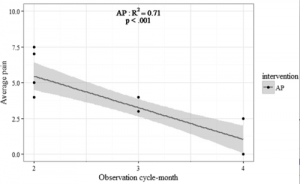
Migraine Reduction from Acupressure
Shiatsu Merchandise

March 12, 2018 — Particularly in Japan – but also increasingly elsewhere – there is a lot of shiatsu branded merchandise. This can range from hand held self-massaging tools, through to automatic ones. These can be hand held mechanical massagers, through to very large mechanised chairs. If you go to a Japanese Onsen (温泉) or spring, people love to loll around before and after bathing in the waters. What better than to get a massage? There will often be someone in the hotel or ryokan that will offer shiatsu. But in addition to this there can be these huge chairs with undulating backs that you can set to give you the kind of massage you like. My husband once spotted some of these chairs in Schipol Airport.

Not only this, but top of the range car manufacturer – Lexus – even has made top-of-the range cars with shiatsu massage programmes available. A 15 minute programme – that also heats the rear car seats – will administer shiatsu to passengers in the back of the car. Of course all of this is massage – not shiatsu. Shiatsu work with pressure points on the body depending on what ailments you are suffering from. The merchandise is simply giving a random massage depending on what you choose to select or do. Shiatsu is specific to the ailments someone has, and pressure is applied in very specific places according to this. Of course not to say a random massage is bad – it just isn’t shiatsu. It is pure marketing.

Shiatsu Helping Better Sleep

March 4, 2018 — Looking back over previous posts pain management, and helping people with poor sleep patterns and insomnia are some of the most common themes. Today’s post is about another new study relating to how shiatsu can help with people suffering from poor sleep. Previous posts on this subject can be found here and here from a variety of different medical journals.

The article I found this week is published in Wiley’s Journal of Sleep Research. Researchers at Hong Kong Polytechnic University divided 31 participants into two groups. One set of people suffering from insomnia were given two lessons in how to administer acupressure to themselves. The other were given lessons in sleep hygiene education – in other words good practices around getting to sleep. Both groups were monitored for 4 weeks after their courses were ended. Using the Insomnia Severity Index the people in the acupressure group were reporting significantly less insomnia than the other group. However contradicting this after a statistical correction aimed at comparing differing groups, the difference did not reach a “significant” level though a difference was still observed. In conclusion the researchers believe self-taught acupressure  could be a feasible and low-cost alternative for people who are experiencing sleep problems.

No matter what scientific journals report on how shiatsu and acupressure can help people with poor sleep, I sometimes can see the effects with my own eyes. It has been known for people to be so relaxed when shiatsu is being given to them that they drop off!

Pain Management in Labour

February 25, 2018 —Many of my posts on my website relate to pain management. This is not surprising as people, particularly as they get older, are bound to experience different episodes in their life which bring about pain. Many of the articles from scientific journals that I find online about shiatsu or acupressure relate to pain reduction, and how shiatsu can help with this.

Although I haven’t paid the hefty fee for looking at the article (Physiological Basis of Pain in Labour and Delivery: An evidence based approach to its management) in full,  as it is behind a paywall – although it isn’t clear actually what sits there as these appear to be guidelines – the recommendations are clear.

The aim of the Canadian study was to look at non-drug based interventions to manage pain in labour. Then from this, develop recommendations for nurses and doctors. One of the summary statements states that there is a growing body of scientific literature which “supports the use of non-pharmacological approaches to pain management during childbirth due to their numerous benefits for the mother and child, including a reduction in the need for obstetrical interventions, labour augmentation of Caesarean section”. It is interesting to see the differing approaches to pain management between countries. From my own experience the UK seems relatively keen to offer drug based interventions early on in labour, while in Japan the opposite is the case.

The report recommends that one way of helping with pain is to apply acupressure during labour to the body. Whereas the report states “any site on the body” during the duration of the pain, from a shiatsu perspective this will not be as effective as applying pressure to the appropriate meridian. Of course acupressure is not the only recommendation to help with pain but it is good to see a growing body of scientific literature writing about its benefits.

I haven’t been very good this year in updating my posts on scientific articles I find about acupressure and shiatsu. I must get better!

Treatment for Chronic Lower Back Pain

January 3, 2018 — Happy New Year! 明けましておめでとうございます! I would like to wish all my clients a happy and prosperous 2018.

My last post was about a shiatsu practitioner in Japan, but for this first blog of 2018 I return to a more usual blog about the health benefits of acupressure and shiatsu. I have noticed that there is a lot of interest in shiatsu in Iran. This might be as a transitional economy they are interested in low cost but effective treatment methods. Also one reason is that the links between Iran and Japan are quite deep – with many Iranians coming to Japan in the nineties to work. This was in part I understand because Japan did not require visas for Iranian nationals to enter Japan, so was relatively easy for Iranians to travel there. This might explain why an interest in acupressure / shiatsu has grown in Iran. Well that’s my theory anyway!

This study compares the results of sham acupressure and real acupressure on a group of 50 nurses who were suffering from chronic back pain. Nurses comprise 80% of the staff in a hospital according to the study and lower back pain at some point in a nurse’s professional career is extremely common.  The nurses were divided into two groups and the results found little difference in the severity of the pain before the trail. However the group that received acupressure reported a significant decrease in pain 2 and 4 weeks after the acupressure was performed. This was recorded by a questionnaire hence the detailed nature of the reporting periods.

Back pain is very common of course in the UK as anywhere. If you look through my blogs there are many posts summarising journal articles that show how acupressure can benefit people with back pain. Why don’t you give shiatsu a try?

Shiatsu in Japan

November 12, 2017 — It’s been a lot longer than I thought, that I have done a blog piece. I usually do one based on medical findings from articles around the benefits of acupressure and shiatsu. However today I looked through the English and Japanese news and decided to try something different.
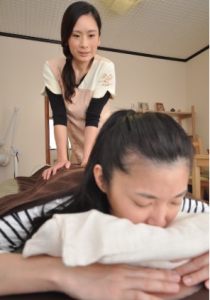
I found this story from one of Japan’s largest selling newspapers the Mainichi Shinbun. It is no more than a human interest story about a Shiatsu practitioner (pictured here) who moved from the Tokyo area to near Nara to set up a shiatsu practice for women only. She set up it at the foot of Mount Kōya (高野山) a sacred site for pilgrimage now recognised by UNESCO,  where the Koyasan Shingon Buddhist sect is headquartered. In total there are over 120 temples dotted about the valley, and for centuries women were not allowed to go to the top of the mountain.

Ujiura Shinobu, who used to live and work near Tokyo, explains that is she remained single beyond the age of 35, she always wanted to live in the countryside. Falling in love with the Koya san area, she finally made the move 3 years ago. Though she explains that at first she often felt lonely and was treated with some scepticism by locals who saw her as an incomer not likely to stay long. Things however have clearly turned around as she has opened up her own salon, and is planning to marry a man she recently met up in the mountains in the area. This is good news in an area that has seen a 70% decrease in its population since 1955.

Perhaps what interests me most about the article was her reason for starting to study shiatsu, moxibustion and acupuncture. This came from her own experience when younger of feeling the need to help family who were suffering from mental problems. We all have our own reasons for taking up shiatsu, and it always interests me to find out how people came to it. There is even a little video you may enjoy!

Most common Shiatsu question in Japan

July 30, 2017 — As you may have noticed I don’t live my life on social media or on this blog – which is why months may go by without a post. I then panic as usually this means I have dropped down the google ranking. Yikes. Yesterday I thought I better do a tweet and on a trawl of the internet found this funny Japanese article that made me laugh.

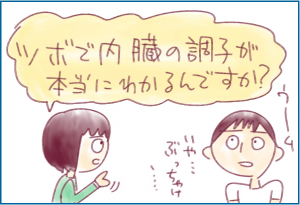
The Japanese masseur, Mitsuhiro Saito, based in Tokyo, writes that probably the most frequent question he is asked by patients is whether he can tell what is going on in their intestines. This is probably because at the start of a shiatsu treatment part of the diagnosis involves  pressing someone’s abdomen.

Well strangely enough the answer is no! Shiatsu is a holistic treatment, aimed at treating the whole body. The touching of the abdomen, for diagnostically purposes is because the area is soft and according to Oriental traditional medicine you can feel whether the meridians (which transport energy around the body) are out of kilter. It isn’t because you are feeling whether the stomach is functioning normally or not. Of course Western Medicine doesn’t recognise the existence of meridians. Previous posts have shown that as we understand more about the body, we have discovered that the concentration of very fine blood vessels equate to meridians. And if this was all bunkum I wonder why in China they use acupuncture as an anaesthetic in open heart surgery?

Athletes with Injuries

July 15, 2017 — Injuries are a common consequence of sports and recreational activity. Of course athletes often get a massage after they have done training or after a competition. This research published in Wolters Kluwer’s Clinical Journal of Sport Medicine however looked at the effect of acupressure on sports injuries. According to the authors, acupressure has previously been found to reduce symptoms of people suffering from musculoskeletal injury.

The new study from Dunedin in New Zealand was designed to look at reducing pain and anxiety in acutely injured athletes. The study revolved around 79 athletes who had sustained injuries. They were divided into three groups – one which received no treatment, another that received sham acupressure, and a third which received acupressure. Although there was no difference with anxiety between the groups, the group that had received acupressure had 11mm less pain on average than the sham group and 9mm less than the control group. 

This was the result of only 3 minutes acupressure and despite that the findings concluded that acupressure was effective in decreasing pain intensity. Why of course!

Acupressure and General Health

May 12, 2017 — Traditional oriental medicine puts a lot of store on overall health and well-being. The belief being that when your overall well-being is not good, this becomes the cause or root of a specific health issue. We can see this perhaps most clearly, now it is recognised in the West that poor physical health can also cause or affect one’s mental health.

Acupressure or shiatsu massage can help and support one’s overall health, as well as helping with pain relief or perhaps particular muscular and posture problems. It can support various health issues as there are no reaction to drugs.

Although generally I post on specific medical issues that shiatsu massage and acupressure have been found to help with, this time I have found an article published by Oxford University Press on behalf of the British Geriatrics Society that talks about its improvement of general quality of life. Although behind a pay-wall so you cannot see the detail the study looked at sleep and treating pain. The conclusions being that having acupressure 3-4 times a week for 12 weeks does improve old people’s general quality of life.

Well in Japan we have known this for years!

Headaches and Shiatsu Massage

April 20, 2017 — I haven’t done a blog piece for a while and think it is affecting my ranking on a certain search engine so please expect to see a few more small blog pieces in the next couple of weeks. Although this article about treating headaches in a university hospital in Rome is behind a paywall on the Springer website, reading the abstract it looks very interesting indeed.

The article, “Single-Blind, randomised, pilot study shiatsu and amitriptyline in refractory primary headaches” as stated above took place at a university hospital in Rome. A primary headache is one that is caused by the headache alone, and which has no other root cause. The study took as a base, the fact that shiatsu can be a suitable treatment for headaches, and decided to see what effect combining it with amitriptyline (an anti-depressant now widely used as a pain killer) would have. As with many positive studies by medical professionals the study is characterised by the fact it was a small study, and cautions that further study is required. ( I could write a blog piece on this alone as why this is always the case I think needs some exploration.) However the medics having covered themselves by this caveat, concluded that shiatsu alone or in combination helped patients reduce the number of pain killers they took for headaches each month.

The randomised study was on 37 people – 11 took amitriptyline alone, 13 had shiatsu alone, and 11 a combination of both procedures. Although there was no difference between groups in the reduction of headaches, unlike shiatsu, amitriptyline did cause side effects in 7 of the 11 people, and shiatsu was superior in reducing the number of pain killers patients took for headaches. The findings also suggested that there was no overall benefit in combining the two treatments.

As with many of the studies I blog about, this study suggests that shiatsu is effective for differing types of pain relief.